website

This is an archive of our retired blog. Please visit out current website

www.berlindrawingroom.com

Showing posts with label Naturalist. Show all posts

Collaboration with Natural History Museum Berlin


I am excited to officially announce a new collaboration with the Natural History Museum of Berlin; something that has been in the 'planning and development' phase for over a year now. In my pursuit to embody the spirit of the Naturalist, the Natural History Museum seemed like a perfect partner. When I reached out they were very enthusiastic about the workshop format I had already established with the Prinzessinengarten and they wanted to participate in this interdisciplinary dialogue grounded in the overlap between the natural sciences and drawing from observation.

Whereas the workshops held in collaboration with the Prinzessinnengarten and Plant-Expert Matthias Wilkens have been botanical in their focus, the workshops at the Natural History Museum will look through the lens of a Wunderkammer, or Cabinet of Curiosity. The Wunderkammer is the predecessor to modern museums. Instead of following a scientific ordering principle, they were often organized by aesthetic principles, leading to curious combinations and surprising inclusions. 

During the workshop Wunderkammer Drawing we will explore the world renowned collections of the Museum, both on display and behind the scenes. We will have the unique opportunity to meet some of the researchers and learn directly from them about the their work within the museum.

Are some of these researchers modern day Naturalists? Or has the process of specialization progressed so far that there is no longer a place for interdisciplinary work within an institution? Let's find out together! 


Wunderkammer Drawing

with Mira O'Brien (BDR Founding Director) in collaboration with the Museum für Naturkunde Berlin (Natural History Museum)
Imagine you are seeing a scaly Pangolin or an iridescent Morpho didius butterfly for the first time. Is the timid Pangolin a pinecone come to life? Is the shimmering butterfly more than a mirage? It is this sense of wonder at the natural world that we will seek to reconnect with through the act of drawing.
As we explore the collections of the Natural History Museum, we will assume the role of the Naturalist who was both artist and scientist. Through the act of close observation, we will gain unique perceptual insights into our specimens.
During the first four weekly sessions we will focus on drawing techniques. During the following four weekly sessions we will focus on watercolor techniques. While our studies will be more closely aligned with field work than polished studio work, they will contain the vibrancy of wonder.
Location: Museum für Naturkunde Berlin, Invalidenstr. 43 · 10115 Berlin
January 11 - March 1, 2019
Fridays 10:30am-1:30pm
Drawing: January 11, 18, 25, February 1
Watercolor: February 8, 15, 22, March 1
Cost: 124€ per 4 week module. 224€ for both modules.
(includes museum admission)


Cyanotype Botanical Illustrations by Anna Atkins

In the Botanical Drawing Workshop, we mainly focused on drawing and watercolor painting as methods for capturing the likeness of a plant. We did also experiment with pressing and drying plants to create Herbarium plates. While researching Cyanotype for another upcoming workshop at the Berlin Drawing Room, I was excited to learn that one of the earliest uses for this photographic technique was actually for botanical illustrations of seaweed by artist and scientist Anna Atkins.

This from the Public Domain Review, where you can also see more of her work:
"Anna Atkins (1799-1871) was an English botanist and the very first female photographer, most noted for using photography in her books on various plants. Having grown up with her father John George Children — a chemist, mineralogist, and not too successful zoologist — she was surrounded by science and also contributed to her father’s work. Her engravings of shells can be found in her father’s translated edition of Jean-Baptiste de Monet Lamarck’s Genera of Shells, published in 1823, but it is her work with cyanotypes that she is best known for. Through her father and her husband, Atkins came to know both William Henry Fox Talbot, a pioneer of early photography who invented a process of creating photographs on paper treated with salt and a solution of silver nitrate, and Sir John Herschel, the inventor of the cyanotype printing method. She became interested in the cyanotype process which produced images through so-called sun-printing. The object is placed on paper which has been treated with ferric ammonium citrate and potassium ferricyanide, after which it is exposed to sunlight and then washed in water, leading to the uncovered areas of the paper turning a dark blue. The process, known as blueprinting, was later used to reproduce architectural and engineering drawings, but Atkins chose to use it for what is considered to be the first work with photographic illustrations, namely her Photographs of British Algae: Cyanotype Impressions (1843). Only 13 copies of the handwritten book are known to exist, some of which are in various stages of completion. Later, she would collaborate with another female botanist, Anne Dixon (1799–1864), in making two more books featuring cyanotypes: Cyanotypes of British and Foreign Ferns(1853) and Cyanotypes of British and Foreign Flowering Plants and Ferns (1854). Atkins became a member of the Botanical Society in London in 1839, one of the few scientific societies which was open to women."


Drawings from the Naturkundemuseum: Drawing Workshop


As part of the Drawing Workshop, we always take a field trip to Berlin's wonderful Natural History Museum. The drawings always turn out great, and I wanted to share some of them here, along with some of the assignments they pertain to. The class is organized like a drawing scavenger hunt, with various drawing tasks to be completed and specimens to be discovered - or on some cases, invented!

Enjoy!

5 minute blind contour drawing of dinosaur skeleton
invent a new species: combine part of one animal with another
negative space drawing of bones


Charles Darwin + Dodo bird


Naturalists and Drawing

One of the special things about drawing, as a medium, is its versatility. The history of drawing is not limited to fine art, but reaches into architecture, design and science, and more. The Naturalists of the 19th century were simultaneously scientists, explorers, and artists. They relied on drawing to record their findings, and interpret their results. The process of creating these drawings and diagrams often involved close, intimate and durational observation. I often wonder how the process of drawing effected the understanding of the subject matter. Can a special or specific kind of knowledge or understanding be gained by this kind of close observation, in comparison to that gained by indirect observation?

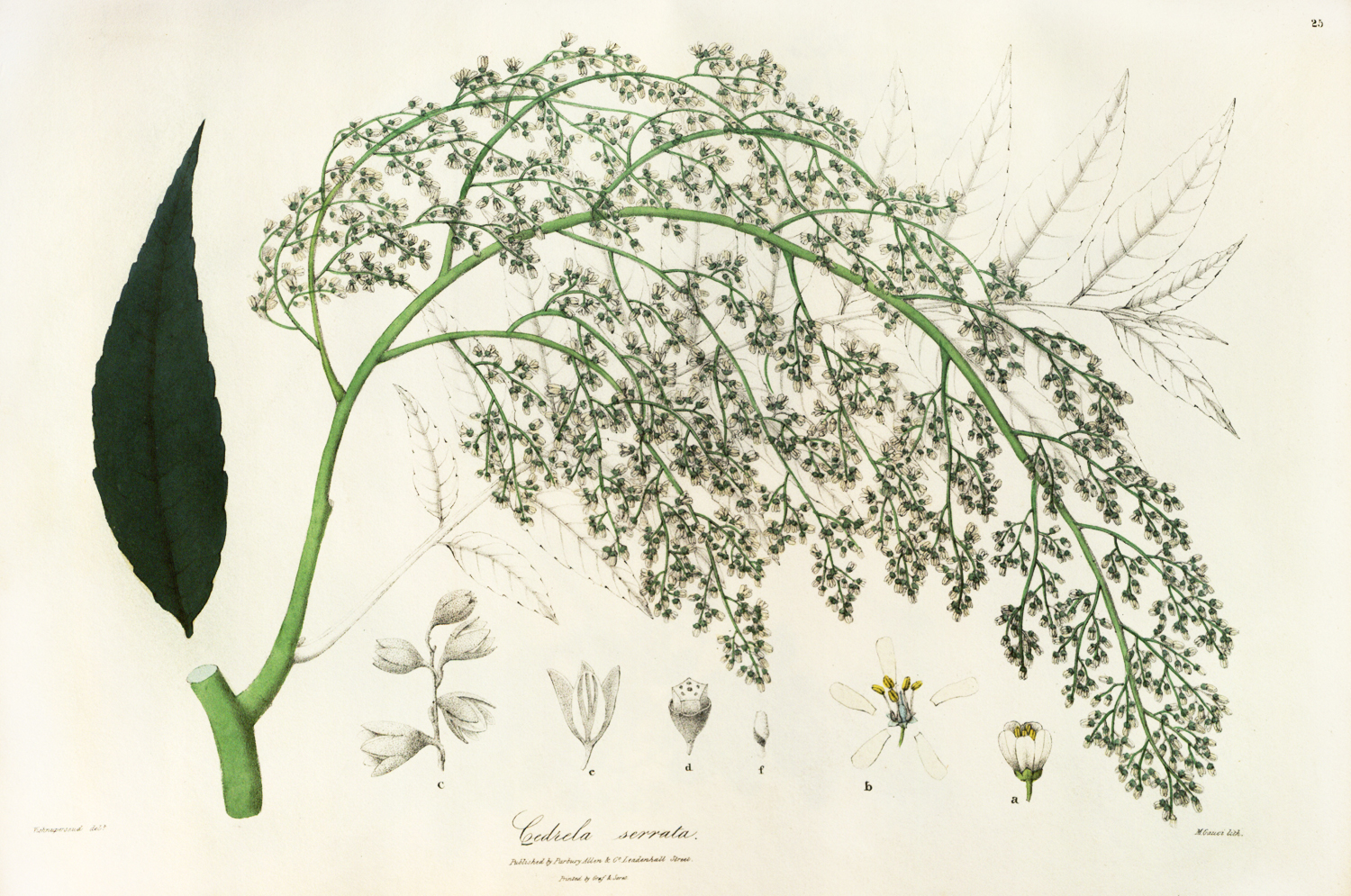
Botanical Illustration by Vishnupersaud from mid 1800's
Indian artist commissioned by British Imperialist explorers and naturalists because of his extraordinary painting technique. 

Franz Andreas Bauer (1758 - 1840)
One of the first botanists to create illustrations with the use of a microscope.
Francis Masson (1741 -1805) 
Masson was the first "plant hunter" for Kew gardens, discover over 1700 new species on his various expeditions.  
William Sykes (1790 -1872)


Alexander von Humboldt, Prussian Naturalist, (1769 –1859)
John Ruskin was an interdisciplinary figure, combining writing, art and architectural criticism, travel writing and philosophy with drawing and watercolor.

John Ruskin, English art critic and thinker (1819-1900)

John Ruskin, English art critic and thinker (1819-1900)