website

This is an archive of our retired blog. Please visit out current website

www.berlindrawingroom.com

Showing posts with label drawing. Show all posts

Reflecting back on Drawing Water


Ink drawing made during the Drawing Water Workshop, 2018

Last summer accomplished multi media artist, drawing instructor and scuba diver Klara Hobza led the Drawing Water Workshop. Equal parts drawing workshop and immersive experience, the meditative nature of this class led to some stunning work made by the participants. This summer we are offering a second edition of this workshop. So if these images look inspiring to you, you can join us! Sign up on our website.


Drawing Water Workshop

with Klara Hobza (artist, drawing instructor and expert scuba diver)
Immerse yourself in deep observation and self-expression through the process of drawing water in motion. Explore how observational drawing can lead to abstract imagery by focusing on the unique qualities of water such as movement, rhythm and texture.

After an introduction to water images spanning from Japanese masters to contemporary artists, we will exercise basic drawing techniques that help us depict water in movement and water as a reflective surface.

We will apply a mixed-media drawing approach, layering line drawing with liquid ink brush and charcoal. Out in the field we will practice both quick motion studies and multi layered long studies. The observational and immersive techniques acquired will prove valuable in the process of understanding the craft of making images.

For current dates and details visit our website.


Drapery in Art History and in the Sketchbook


The Ecstasy of St. Teresa (detail) by Gian Lorenzo Bernini (1647-1652)

Flowing folds of fabric can be incredibly expressive, suggestive, or even uncanny, making drapery a crucial subject to master for artists throughout the centuries. The formal properties of drapery have been used to accentuate and guide compositions, even serving as emotional cues, within sculpture, drawing and painting. Being able to proper render drapery has also been a way for artists to put their technical mastery on display, a sign of just how tricky it can be. Or should we rather say, how tricky it can seem? While drawing drapery might seem like a daunting challenge, with Giulia guiding you through the process, it will unfold beautifully ;)

Costume and Drapery in Figure Drawing: March 14 - April 11, 2019

Drapery for a seated figure by Leonardo da Vinci (1470)
The Lovers by Rene Magritte (1928)

Giulia Caruso is an incredibly patient and experienced instructor, trained in Italian classical techniques for many years. Below she shares some remarks on her experience of drawing and teaching to draw drapery, along with some pages from her sketch book that she takes with her to museums.

Drawing drapery is one of the things that most often makes my students moan and roll their eyes. It can be frustrating and discouraging how a simple piece of cloth can be so stubborn in its shadows and so hard to render with decent softness and volume.
But drapery can be the perfect starting point to learn how to master chiaroscuro and find confidence in other subjects. If you can make a dress feel alive, then everything else will follow.
When I study at the museum I never shy away from drapery: neoclassical sculptures are especially magical in this, showing the extreme mastery involved in making marble look alive and in movement. And sitting there in front of it, focusing slowly on folds and shapes, can be a truly meditative experience.
With every complexly lit subject, the secret is always in the process. The method. Trying to draw drapery without a plan can be overwhelming. It's hard to keep track of where you are and everything falls over itself, while you groan and curse the sculpture that made it so hard. But if you have a plan, it's like learning how to surf. You recognize waves and patterns, and once you are in the flow, it's not so hard anymore.
Clothing has always had a special role in classical art, embodying and conveying meanings that go further than what the eye can see. The whole symbolism hidden behind them is fascinating and it can be inspiring for character design and illustration.
My goal as a teacher has always been to give people tools to express themselves and their vision, to guide them through a process of understanding and discovery of their own potential.

Most of the times it's not in the practical skills but in the mind structure: the way our visual education allows us to analyze and understand the structure of a subject, the logical process of planning how to approach it and trasform it on paper.

Once that foundation is there, the rest is only practice. Keep drawing, and quantity will bring quality.
One of the biggest task required in drawing and painting is to correctly recognize and organize tonal values, and drapery is the perfect subject for that: once the need for perfect similarity is gone (because you can't really recognize one piece of cloth from another) what is left is only a symphony of tonal values, winding together to create fluid shapes.

Klara Hobza draws water


by Hallie Frost

To hone her drawing practice, Klara Hobza visits the water. Wherever she is, everyday she tries to find the closest river, lake or ocean to draw its surface. “Water forces you not to cling to landmarks” she says, and I recall some introductory art class professor referring to drawing as “mapping”. Not here.

Hobza’s Drawing Water Workshop with the Berlin Drawing Room arose out of her deep engagement with water as subject matter in combination with a long term drawing practice. Learning to draw at 14, Hobza immediately gravitated to drawing not only as a practice for creating an image but also as a tool to see. The process of drawing as a mode of perception, as well as physical activity, is for her just as important as the outcome. By focusing on the hand-eye coordination during the act of drawing, one is effectively training the hand to see.

As we walked by the Spree in Hobza’s Kiez Friedrichshain, she remarked that her drawing practice as a teenager saved her from the anguish most people, but especially women, experience as we grow into our bodies. The practice of drawing as observation allowed her to appreciate bodies as they are and not as they should be.


While the workshop will stay on the surface, Hobza’s own practice lies many meters below. As a trained scuba diver, her current ambition is to dive through Europe allowing the Rhine river to carry her from the southeastern Alps until it empties into the North Sea. Familiar with a recreational hobby that presupposes sunny coral reefs, I could only ask “Isn’t it dark down there?” To which she responded with the many other sensory experiences one must rely on when navigating in a heavy, powerful darkness where you can see maybe a few feet in front of you. In a collaboration with Basel Thomas Geiger, Hobza is creating a number of flotation devices attached to tools and talismans that will go on the journey down the Rhine just ahead of her. The way these tools will have changed in the water will affect their use to her; that they may reach her “competent and knowing due to the river they’ve both been submerged in”. This journey through water is the stuff of classic literary imaginations and Hobza comments on this, saying much of her art is invoking imagination. “The Rhine is an art on a grand scale, a Richard Serra scale” she jokes. I suddenly become aware of the world’s greatest sculptor.


The workshop will take place by the Spree Hobza visits daily. Utilizing the tools she relies on- Charcoal, chinese calligraphy ink and brushes, students will create a close study and do quick-time sketches of three different bodies of water. They’ll work to observe the mirrored image on still water, the aspects of grey, the plasticity of shadow, and the volume and shape that are often denied of surfaces. It will be three days of instruction, conversation and observation of water and undoubtedly after my brief walk with Hobza, of art.


August 2 – 5, 2018
Thursday, August 2nd in the studio, 6 – 9 pm
Saturday, August 4th at the river Spree, 2 – 5 pm
Sunday, August 5th at the river Spree and at Karpfenteich, 2 – 5 pm
Cost: 80€ + 12€ Materials Fee*= 92€
        *Materials Fee includes: A4 Drawing Paper Block, Portfolio Folder, Waterbrush, Chinese Ink, Willow Charcoal

New Workshops in August 2018

I am very excited to announce our August workshop schedule! We have three new workshops with three new artist instructors.

Dive deep into the subject matter of water with artist and expert scuba diver Klara Hobza! The Drawing Water Workshop will explore the challenging task of drawing water in motion, using both traditional and experimental techniques. Klara is an internationally recognized artist and she will be sharing her technical tips and passion for water with the class. 

Expand and hybridize your understanding of what paper can be! Artist Loren Britton has focused their own artistic practice around paper-making, reinventing this traditional medium in both conceptual and sculptural forms. The Paper-making Workshop with Loren promises to be stimulating and fun, in both expected and unexpected ways.

And finally the workshop that many of you have been waiting for.. We are very excited to offer the Painting Workshop with internationally acclaimed painter Maureen Jeram. Maureen combines her training in Italian Renaissance painting with her studies under George Baselitz to give you an entirely fresh approach to traditional painting techniques.

It is a great honor to introduce you to Klara, Loren and Maureen. Check our TEAM page to learn more about these incredible artists and find links to their homepages.

To sign up for a workshop, including Botanical Drawing Workshop and Colors from Nature in July, please visit the homepage for each workshop linked below. There you will find a registration form. Or just reply to this email, that works too!

all the best,
Mira O'Brien
Founding Director
Berlin Drawing Room

Drawing Water Workshop

with Klara Hobza, artist, drawing instructor and expert scuba diver.
Immerse yourself in deep observation and self-expression through the process of drawing water in motion. Explore how observational drawing can lead to abstract imagery by focusing on the unique qualities of water such as movement, rhythm and texture.
We will use the techniques of layered line drawing with liquid ink brush and charcoal. Out in the field we will practice both quick motion studies and multi layered long studies. 
August 2 – 5, 2018
Thursday, August 2nd in the studio, 6 – 9 pm
Saturday, August 4th at the river Spree, 2 – 5 pm
Sunday, August 5th at the river Spree and at Karpfenteich, 2 – 5 pm
Cost: 80€ + 12€ Materials Fee*= 92€
        *Materials Fee includes: A4 Drawing Paper Block, Portfolio Folder, Waterbrush, Chinese Ink, Willow Charcoal

Paper-making Workshop

Get your hands wet in paper pulp while exploring the process of papermaking! This workshop takes a fresh look at the everyday material of paper, using an approach that is tactile, colorful and playful. Take your paper scraps and transform them into a new ‘drawing’, ‘painting’ or hybrid sculpture.
Pulling from histories of collective making we will explore the materiality of paper together. Learning from artist, Loren Britton, who uses this process in their own work, we will process, pulp, practice, and produce pulp works that embed bits of our own and collective history into a new object.
August 9 - 12, 2018
Thursday, August 9th: 6 - 9 pm
Saturday, August 11th: 12 - 4pm
Sunday, August 12th: 12 - 4pm
Cost: 130€
Materials included: Participants will be encouraged but not required to bring their own paper pulp materials for conceptual reasons.

Painting Workshop

An introduction to the expressive and versatile medium of painting with a focus on traditional painting methods. Starting with basic color theory, learn how to mix colors and achieve a unified color world. Through exercises designed to show the difference between hue and value, or the relationship between complimentary colors, we sharpen our understanding of how colors interact and how to mix paint.  Learn step by step how to craft a painting by exploring techniques for paint application, brushstrokes and composition to create form and space.

August 7 - September 11
6x on Wednesday in the studio from 6-9 pm
1 x Field trip on Saturday, September 1, 12-2pm
Cost: 160€ (includes non-toxic acrylic paint)

Anatomy Drawing Supply List


Dear Class,

Please bring these supplies with you for the Anatomy Drawing Workshop. Other more specialized drawing materials will be provided at the Berlin Drawing Room.

  • A3 sketchbook
  • watersoluble/very soft colored pencils (3-4 different colors, or a set if you already have)
  • kneaded eraser (Knetgummi)
  • 4b pencil
Check out our handy guide on where to buy art supplies in Berlin! GUIDE

Once again details regarding the Anatomy Drawing Workshop can be found on our website.


Portrait Drawing Tips

Here are some of the diagrams we looked at in the Drawing Workshop. Although there are hundreds of anatomical drawings showing different splicings of facial proportions, these are the few basic ones I find the most useful.

I would also like to recommend Betty Edwards' "Drawing on the Right Side of the Brain," where I sourced a couple of the diagrams below. 

Of course the best thing is to rely on your observations, but these diagrams should help you get started with portrait drawing.


5 Useful Tips for Drawing Accurate Portraits

1) The most important ratio to remember is that the eyes are in the middle of the head. There is a tendency to want to put the eyes towards the top of the head, but this is incorrect. 
Facial Proportions for portrait drawing 
2) For a 3/4 view of the face, the central axis of the face is a curved line. You can imagine this as similar to longitudinal and latitudinal lines on a globe.
Structure for starting a 3/4 view portrait
3) The most common error in portrait drawing is making the skull too small. See the very helpful diagram below.
Cut-off Skull Error
source: Drawing on the Right side of the Brain by Betty Edwards
4) Sometimes it can be difficult to place the ear, when drawing a profile. It just seem to float out there on its own. Here is a measurement that will put the ear in its proper place. 

source: Drawing on the Right side of the Brain by Betty Edwards
5) Use the sighting technique for measuring angles with your pencil to measure the angle from the nice to the chin and from the nose to the forehead. There will be a substantial angle. Not a straight line.

Use sighting technique to measure the angle from nose to chin.


Tonality Drawings: Student Work

Each class in the Drawing Workshop focuses on a different formal topic. The focus of the third class was tonality, or shading. To make a tonality drawing, one cannot leave any visible outlines, or contour lines. This technique requires a lot of patience, as one must slowly build up layers of graphite to blend the tones and achieve enough contrast. My students did a great job on this assignment! Check out their work! 
Some other artists we looked to for inspiration on this technique are: Georges Seurat and David Musgrave. Just click on their name to see some of the examples of their work that we looked at during class.


Naturalists and Drawing

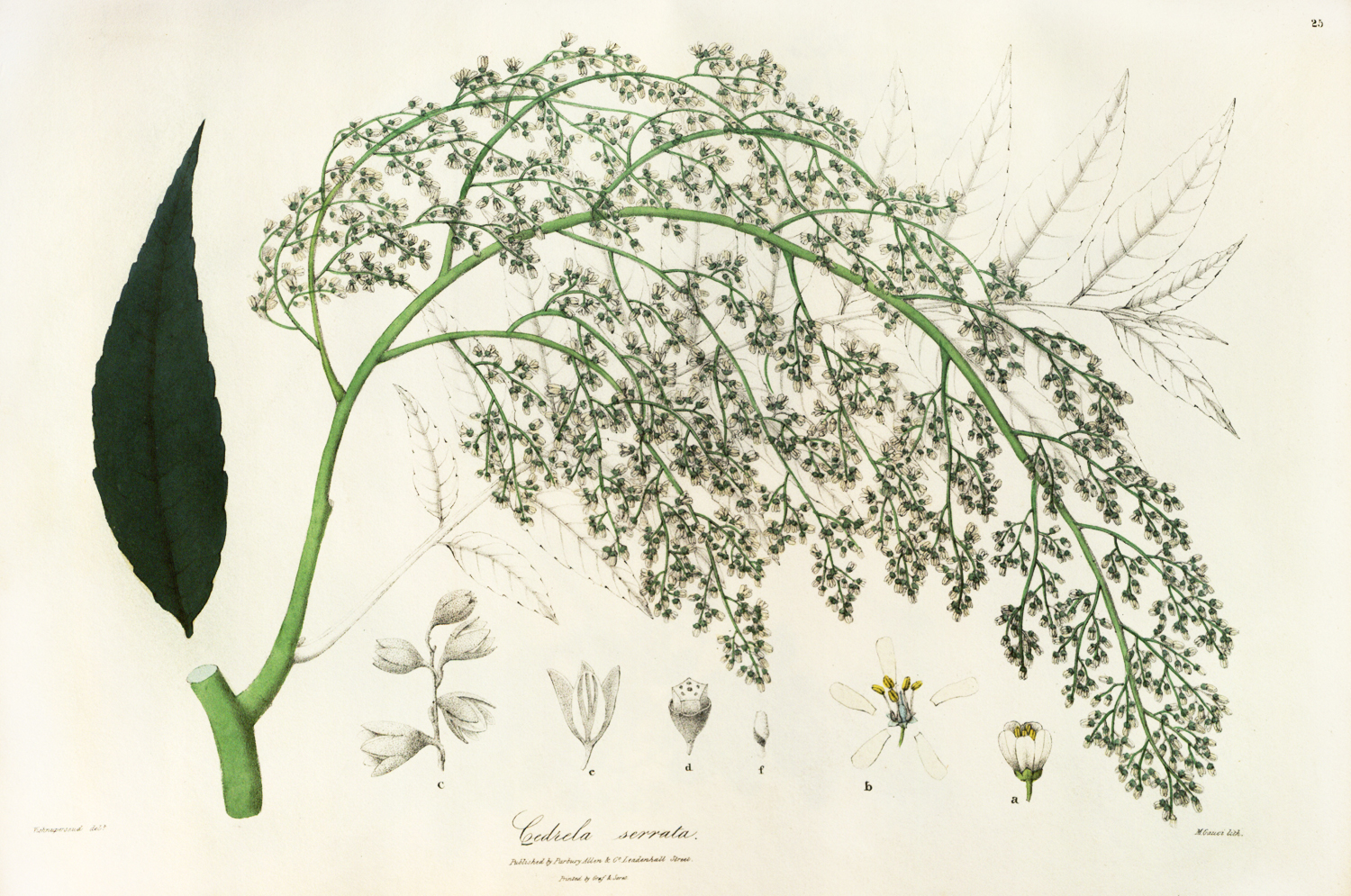
One of the special things about drawing, as a medium, is its versatility. The history of drawing is not limited to fine art, but reaches into architecture, design and science, and more. The Naturalists of the 19th century were simultaneously scientists, explorers, and artists. They relied on drawing to record their findings, and interpret their results. The process of creating these drawings and diagrams often involved close, intimate and durational observation. I often wonder how the process of drawing effected the understanding of the subject matter. Can a special or specific kind of knowledge or understanding be gained by this kind of close observation, in comparison to that gained by indirect observation?

Botanical Illustration by Vishnupersaud from mid 1800's
Indian artist commissioned by British Imperialist explorers and naturalists because of his extraordinary painting technique. 

Franz Andreas Bauer (1758 - 1840)
One of the first botanists to create illustrations with the use of a microscope.
Francis Masson (1741 -1805) 
Masson was the first "plant hunter" for Kew gardens, discover over 1700 new species on his various expeditions.  
William Sykes (1790 -1872)


Alexander von Humboldt, Prussian Naturalist, (1769 –1859)
John Ruskin was an interdisciplinary figure, combining writing, art and architectural criticism, travel writing and philosophy with drawing and watercolor.

John Ruskin, English art critic and thinker (1819-1900)

John Ruskin, English art critic and thinker (1819-1900)


Panel Discussion on the Role of Drawing in Contemporary Art


detail from "Imperfect Barrier: Tied" 2014
Mira O'Brien
on view at 68projects

Join us on Saturday afternoon at 68projects in Charlottenburg for a special panel discussion on the role of drawing in contemporary art. Is drawing still important? With the rise of digital media, what advantages might it still offer?


We will seek to answer the question:


Come and hear Mira O'Brien*, Kandis Williams and Tom Anholt discuss this and more questions in our artist talk.

* Mira is the founder/instructor of the Berlin Drawing Room - and obviously taking the pro-drawing side of the argument!

The discussion will occur in the context of the group exhibition:

Person, Place or Thing: Works on Paper From 51 Artists


15 November 2014 – 10 January 2015

68projects
Fasanenstr. 68
10719 Berlin

Panel Discussion and Reception: Saturday, December 20, 3pm

Find a link to a map here: http://www.68projects.com/getting-here-2/


Naturalist drawing
To see images on more drawing by Naturalists, visit this follow up post: "Naturalists and Drawing"