website

This is an archive of our retired blog. Please visit out current website

www.berlindrawingroom.com

Art Supplies in Berlin

Need a new pencil?

I have been meaning to get around to this for a long time now! Students ask me all the time where to go to buy art supplies in Berlin. Here are some of my recommendations, all in one spot! If you don't see your favorite shop listed here, leave your recommendations in the comments. Thanks!

1. Boesner
This is the largest art supply store in Berlin with the best selection of paints and brushes. Unlike most of our other recommendations, they are big and corporate - but if you want a one stop solution to your painting and drawing needs this is probably your best bet. But don't go there expecting help or advice on what to buy.
  • Prenzlauerberg and Charlottenburg
  • Marienburger Straße 16, Berlin
  • 030 40504260

2. Planet Modulor
A wonderland of design and architecture paraphernalia! Definitely worth a visit, but not the best place for fine art supplies. Their selection of paints, brushes, etc... is limited and expensive. But if you are looking for a notebook, and excellently designed paperclip, a model making material you never new existed, or need to get something laser cut, go here.
  • Prinzenstraße 85, 10969 Berlin Kreuzberg at Moritzplatz
  • 030 69036200

3. Peter's Art
Located in Wedding and specializing in painting supplies. Their website is quite good and if you know what you want, they will deliver orders over 99 euro. They also make custom size canvases. Used by many professional artists in the city.
  • Gottschedstraße 26, 13357 Berlin Wedding
  • 0177 7068615 or info@peters-art.de (to place an order for delivery)

4. CYM Kunst- und Zeichnenbedarf
This is a cute little shop specializing in drawing and painting supplies. They are usually happy to advise you on what to buy and prices are reasonable. The Planufer store is generally more for drawing and Dieffenbachstr. is more for painting. But it's just a short walk between the two locations if you need to visit both.
  • Planufer 96 & Dieffenbachstrasse 16, 10967 Berlin Kreuzberg
  • Telefon: 030 / 691 29 43
  • Hours: Mo-Fr 10-6pm, Sa 11-4pm

As recommended by Keir, former participant of nearly every workshop available at the Berlin Drawing Room. And he got all of his supplies here!
"Super friendly shop with really fantastic stock, particularly good for the pro end and really good quality stuff." - Keir Edmonds

  • Warschauer Strasse 20, 10243 Berlin Friedrichshain
  • Hours: Mo-Fri 10-6pm, Sat 10-3pm
6. Edelhoff KREATIVKAUFHAUS
As recommended by Kate Perets, another regular at the Berlin Drawing Room! Fine art and craft supplies.


Assemblage with Found Surfaces

Mixed Media class: scroll down to the bottom of the page to get tips for your upcoming assemblage assignment!
Pablo Picasso, La bouteille de Suze (Bottle of Suze) 1912
movement: Synthetic Cubism
The assemblage is a truly modern phenomenon. The technique of assemblage is the incorporation of everyday objects and surfaces into a composition, either 2-dimensional or 3-dimensional. The intention is to bring elements of everyday life directly into an artwork.

Assemblage started with Synthetic Cubism, a movement that further flattened the space of Cubist painting by introducing recognizable collage elements. Fragments of newspaper, product labels, wallpaper, etc... were used not only as a formal element of texture and color, but also as familiar objects - undisguised.  

The absurdity that could result from decontextualizing everyday objects within an artwork was enthusiastically explored by Dada and Surrealist artists. They saw a world that no longer made sense, at least not in the old way. Industrialization meant that machines were replacing humans and WWI sent home soldiers that were literally pieced back together. 

Max Ernst, "Fruit d'une Longue Experience" (Fruit of a Long Experience) 1919
Movement: Dada
Kurt Schwitters, "Merzbild Rossfett" 1919
Movement: Dada
American artist Robert Rauschenberg continued the technique of assemblage in the 1960's. He referred to these hybrid painting-objects as Combines. Like Schwitters, he developed his own visual language through the combination of everyday found objects and painting. The compositions often have the feeling of being psychologically charged. Although very influenced by Dadaism, one difference that I see with Rauschenberg is that while the Dada artists were more concerned with deconstructing meaning, Rauschenberg seems to be building meaning. His Combines are like sentences that cannot be quite deciphered, but lead one to imagine to that with the right key they could be. 

Robert Rauschenberg, Combine
Movement: Abstract Expressionism 
Robert Rauschenberg, Combine 
** For the Mixed Media class this Sunday, please bring a collection of found surfaces that can be used for an assemblage. Look for surfaces with interesting textures, for example a weathered piece of wood, a rusted piece of metal, or a torn poster. Choose objects and surfaces that reflect your everyday life! Maybe something you find in the recycling bin of your work, a label from an oft used product, objects found on your daily commute. Look out for materials when you are walking on the street, this is probably the best way to find stuff!


Winter Painting Workshop Gallery Tour

Billy Childish at Neugerriemschneider
Last weekend we explored some of the offerings in the contemporary art galleries of Berlin. Believe it or not, but sometimes it can be tricky to find good painting shows in Berlin. But we did manage to visit three very different and interesting painting exhibitions. Combined with the sunny weather, strolling through Mitte, this made for a great Painting Workshop field trip!

First stop was the gallery Peres Projects, where we saw the exhibition My Heroine and Her Mate by the artist Dorothy Iannone. Although Iannone is best known for her feminist erotic drawings, we were treated to some of her earlier abstract paintings. Although precursors to her later works were to be spotted in this painting, "The Sea Where Cleopatra Bathed" from 1964. We learned that this American artist was born in 1933 and lives in Berlin.
The Sea Where Cleopatra Bathed, 1964
Dorothy Iannone

The next stop was Reena Spaulings Later Seascapes at Galerie Neu. We were confronted with an at first glance cryptic press release, which we eventually realized we could take in the most literal sense. The paintings were physically painted by an iRobot Scooba 450, a robotic vacuum cleaner, and they claimed to reference seascapes by JMW Turner. "Spaulings channels the senile-visionary late later Turner in the robot's drone-like way of attacking the canvas like any vacuum floor," states the press release. Some of us were quite entertained by irreverent personality of the show, while others found it to be overly smug and ironic. But definitely thought provoking!
Later Seascapes by Reena Spaulings at Galerie Neu
© Reena Spaulings - Photo: Stefan Korte, Berlin
Courtesy the artist and Galerie Neu, Berlin
The last stop was at Neugerriemschneider to see the work of painter, poet, musician Billy Childish. Here we saw beautiful and nostalgic oil paintings on linen, contemplating man's relationship with nature and family, and his place the world. The paintings also contained many art historical references and influences, including Van Gogh, Edvard Munch, and contemporary painter Peter Doig, among others. 

Billy Childish


Drawings from the Naturkundemuseum: Drawing Workshop


As part of the Drawing Workshop, we always take a field trip to Berlin's wonderful Natural History Museum. The drawings always turn out great, and I wanted to share some of them here, along with some of the assignments they pertain to. The class is organized like a drawing scavenger hunt, with various drawing tasks to be completed and specimens to be discovered - or on some cases, invented!

Enjoy!

5 minute blind contour drawing of dinosaur skeleton
invent a new species: combine part of one animal with another
negative space drawing of bones


Charles Darwin + Dodo bird


Tonality Drawings: Student Work

Each class in the Drawing Workshop focuses on a different formal topic. The focus of the third class was tonality, or shading. To make a tonality drawing, one cannot leave any visible outlines, or contour lines. This technique requires a lot of patience, as one must slowly build up layers of graphite to blend the tones and achieve enough contrast. My students did a great job on this assignment! Check out their work! 
Some other artists we looked to for inspiration on this technique are: Georges Seurat and David Musgrave. Just click on their name to see some of the examples of their work that we looked at during class.


Naturalists and Drawing

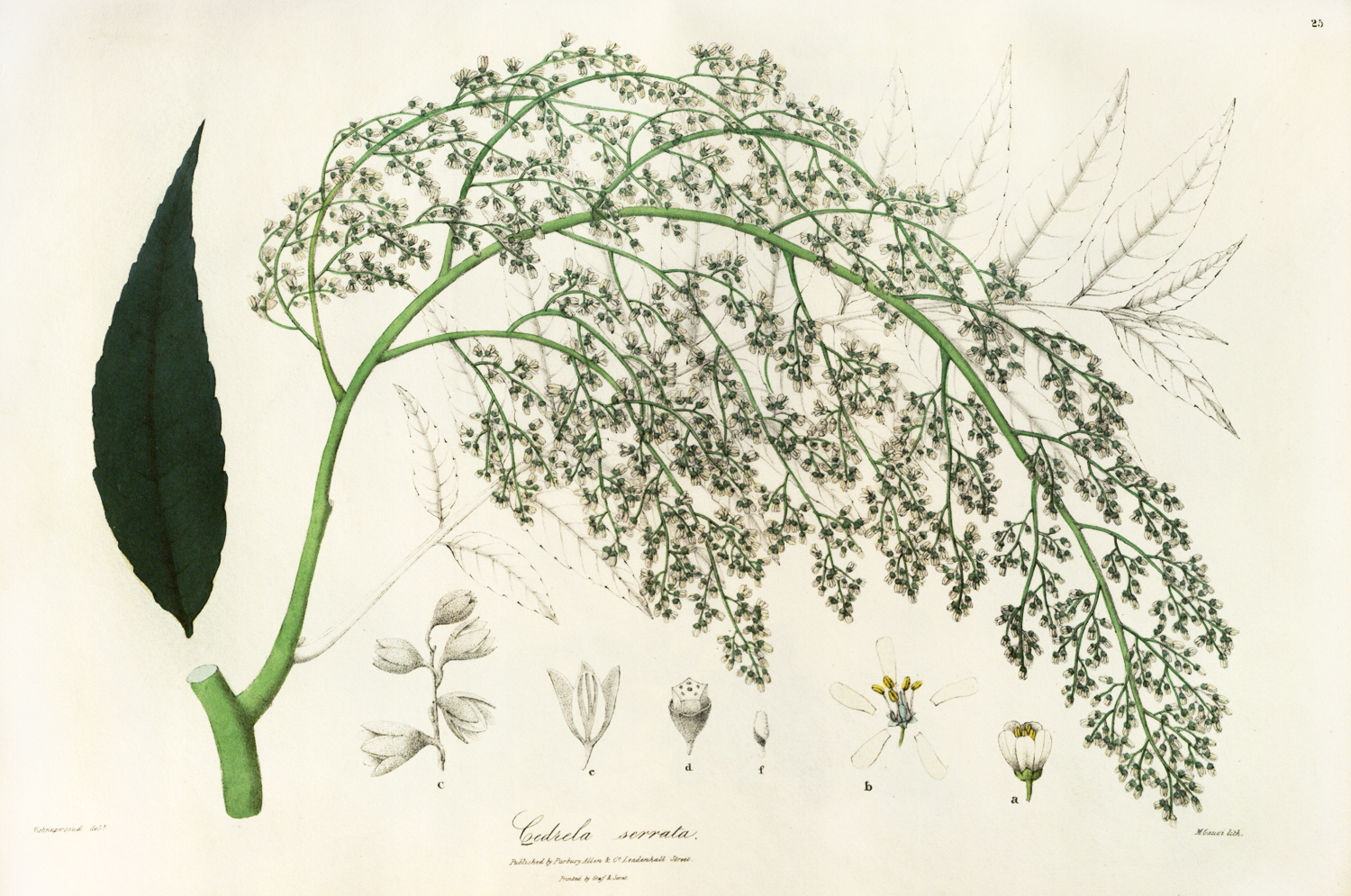
One of the special things about drawing, as a medium, is its versatility. The history of drawing is not limited to fine art, but reaches into architecture, design and science, and more. The Naturalists of the 19th century were simultaneously scientists, explorers, and artists. They relied on drawing to record their findings, and interpret their results. The process of creating these drawings and diagrams often involved close, intimate and durational observation. I often wonder how the process of drawing effected the understanding of the subject matter. Can a special or specific kind of knowledge or understanding be gained by this kind of close observation, in comparison to that gained by indirect observation?

Botanical Illustration by Vishnupersaud from mid 1800's
Indian artist commissioned by British Imperialist explorers and naturalists because of his extraordinary painting technique. 

Franz Andreas Bauer (1758 - 1840)
One of the first botanists to create illustrations with the use of a microscope.
Francis Masson (1741 -1805) 
Masson was the first "plant hunter" for Kew gardens, discover over 1700 new species on his various expeditions.  
William Sykes (1790 -1872)


Alexander von Humboldt, Prussian Naturalist, (1769 –1859)
John Ruskin was an interdisciplinary figure, combining writing, art and architectural criticism, travel writing and philosophy with drawing and watercolor.

John Ruskin, English art critic and thinker (1819-1900)

John Ruskin, English art critic and thinker (1819-1900)


Panel Discussion on the Role of Drawing in Contemporary Art


detail from "Imperfect Barrier: Tied" 2014
Mira O'Brien
on view at 68projects

Join us on Saturday afternoon at 68projects in Charlottenburg for a special panel discussion on the role of drawing in contemporary art. Is drawing still important? With the rise of digital media, what advantages might it still offer?


We will seek to answer the question:


Come and hear Mira O'Brien*, Kandis Williams and Tom Anholt discuss this and more questions in our artist talk.

* Mira is the founder/instructor of the Berlin Drawing Room - and obviously taking the pro-drawing side of the argument!

The discussion will occur in the context of the group exhibition:

Person, Place or Thing: Works on Paper From 51 Artists


15 November 2014 – 10 January 2015

68projects
Fasanenstr. 68
10719 Berlin

Panel Discussion and Reception: Saturday, December 20, 3pm

Find a link to a map here: http://www.68projects.com/getting-here-2/


Naturalist drawing
To see images on more drawing by Naturalists, visit this follow up post: "Naturalists and Drawing"