website

This is an archive of our retired blog. Please visit out current website

www.berlindrawingroom.com

Botanical Drawing Exhibition: July 2-3

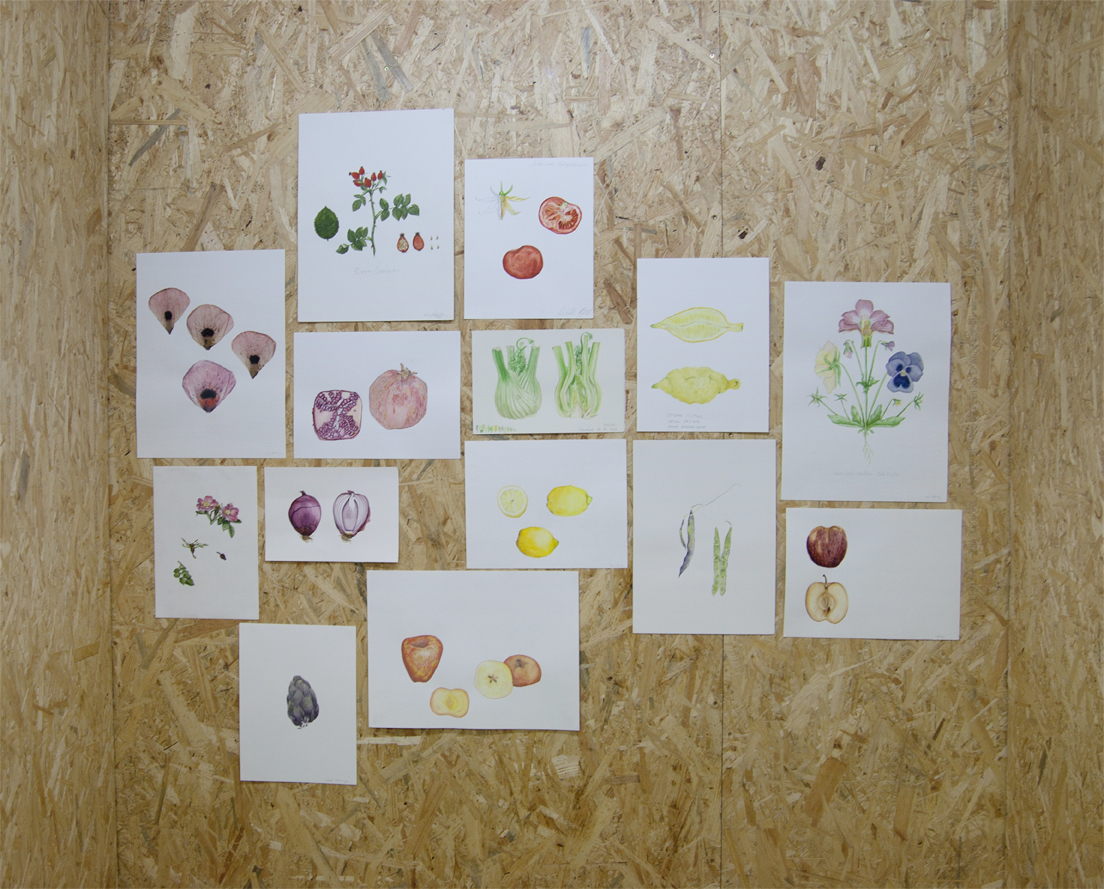
Please join us for a special exhibition of botanical illustrations created during the Botanical Drawing Workshop. The drawings and paintings on display were created through a process of close observation, both at the Prinzessinensgarten and the Berlin Drawing Room. 

The workshop is inspired by the Naturalists of the 19th century, who were simultaneously artists, explorers and scientists. Through the process of drawing from life, we are seeking to discover what kind of understanding and knowledge can be gained through direct observation. Does it have a different content or quality than knowledge acquired through more passive or indirect channels? Does the process of close observation, even when directed at mundane subject matter such as the weeds of Kreuzberg, yield something unexpected?

Botanical Drawing Exhibition: July 2-3
Opening Reception with the artists: July 2, 2-5 pm
Open for viewing Sunday: 12-5 pm

Location: Prinzessinnengarten
Tiny Haus (the small wooden house in the workshop area)
Prinzenstr. 35 – 38 / Prinzessinnenstr. 15 (U8 Moritzplatz), 10969 Berlin

More about the Botanical Drawing Workshop: http://www.berlindrawingroom.com/botanical/
Next Workshop dates: August 10-31
Thank you for everyone who participated in this exhibition, and the you everyone who visited!




Thanks for visiting!


Portrait Drawing Tips

Here are some of the diagrams we looked at in the Drawing Workshop. Although there are hundreds of anatomical drawings showing different splicings of facial proportions, these are the few basic ones I find the most useful.

I would also like to recommend Betty Edwards' "Drawing on the Right Side of the Brain," where I sourced a couple of the diagrams below. 

Of course the best thing is to rely on your observations, but these diagrams should help you get started with portrait drawing.


5 Useful Tips for Drawing Accurate Portraits

1) The most important ratio to remember is that the eyes are in the middle of the head. There is a tendency to want to put the eyes towards the top of the head, but this is incorrect. 
Facial Proportions for portrait drawing 
2) For a 3/4 view of the face, the central axis of the face is a curved line. You can imagine this as similar to longitudinal and latitudinal lines on a globe.
Structure for starting a 3/4 view portrait
3) The most common error in portrait drawing is making the skull too small. See the very helpful diagram below.
Cut-off Skull Error
source: Drawing on the Right side of the Brain by Betty Edwards
4) Sometimes it can be difficult to place the ear, when drawing a profile. It just seem to float out there on its own. Here is a measurement that will put the ear in its proper place. 

source: Drawing on the Right side of the Brain by Betty Edwards
5) Use the sighting technique for measuring angles with your pencil to measure the angle from the nice to the chin and from the nose to the forehead. There will be a substantial angle. Not a straight line.

Use sighting technique to measure the angle from nose to chin.


Botanical Cross-sections


Here are some examples of Botanical Cross-section illustrations to get some inspiration for Wednesday's class. 

Please bring a fruit, vegetable, or even a robust flower specimen to class on Wednesday. We will cut it open and make cross-section illustrations, so think about what looks interesting not only from the outside but also from the inside. Some suggestions would be: lemons, oranges, pomegranates, kiwis, bell-peppers, lilies, fennel, etc... Or see the examples below for ideas. 

Specimens are most interesting when you can have as many parts of the plant as possible. Sometimes if you go to a farmer's market or Biomarkt you can find a fruit with a few leaves attached. Or even better, take something from your own garden!

 Here are a few historical examples:

Georg Dionysius Ehret (1708-1770)
William Hooker (1779 – 1832)
Pierre Jean François Turpin (1775 – 1840)


 Examples of Botanical Cross-sections from the Botanical Drawing Workshop:


Botanical Drawing Student Work: Summer 2015 - PART II

While preparing for the upcoming Botanical Drawing Workshop, I realized that I never posted the work from the last class in September 2015. Even though this post is belated, it is truly worth displaying this work. 

Also, we have been offered an exhibition at the Prinzessinnengarten of work from the Botanical Drawing Workshop! More news on that coming soon. 

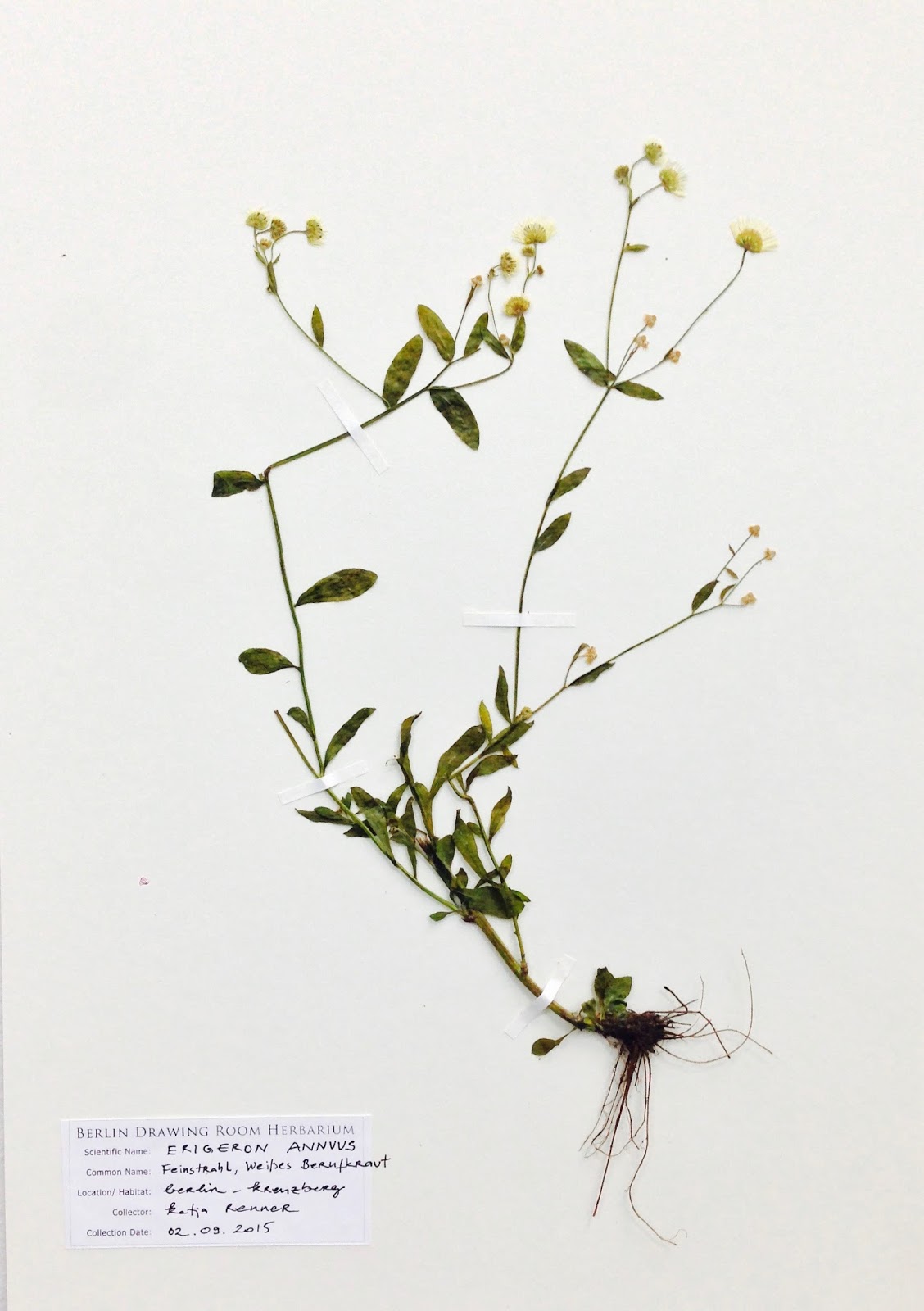
During the workshop we painted from trees in the Prinzessinnengarten, succulents, medicinal plants, flowering plants, and more... The subjects depend very much on the season and availability. We also made pressings in the style of Herbarium sheets from local Kreuzberg weeds. 


Venice Printmaking: Leaked Prints


I recently spent the month of April in Venice as an artist in residence at the Scuola Internazionale di Grafica. I explored several mono printing techniques, including collagraph, embossing and watercolor monotype. 

At the end of the residency, I had an exhibition of my work titled "Leaked Prints." See the press release below. 

Here are a couple of short video clips revealing parts of the process I developed in order to create "Leaked Prints."


"Leaked Prints"

The Scuola Gallery is pleased to present prints and works on paper by current artist in residence Mira O’Brien. 

Headlines announcing leaked albums, data, papers, etc… ask us to imagine content as contained liquid vulnerable to leaks, spills and breaches. Such leaks are therefore inevitable, as no system is fully resistant to the insidiousness of a constant trickle or a changing tide. Rigidity is subject to corrosion and solid forms are unstable in this fluid circumstance.

“Leaked Prints” reveals a process that embraces chance within an entropic system. Contrary to the traditional aim of printmaking to produce multiples, these monotypes cannot be duplicated. Traces of linear forms swim through a murky watercolor architecture, whose geometric forms are embossed and degraded through a process that cannot be reversed.

Reception in the Gallery: Friday, April 22, 6pm
Scuola Internazionale di Grafica Venezia
Calle del Cristo 1798, 30121 Venice, Italy